

Crown rot symptoms in alfalfa PowerPoint PPT Presentation
1 / 9
Title: Crown rot symptoms in alfalfa
1
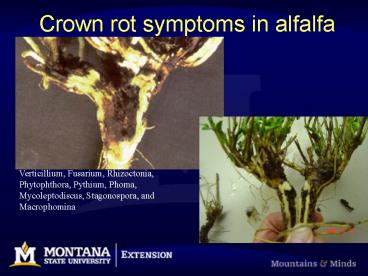
Crown rot symptoms in alfalfa
Verticillium, Fusarium, Rhizoctonia,
Phytophthora, Pythium, Phoma, Mycoleptodiscus,
Stagonospora, and Macrophomina
2
Crown rot control
- Variety selection
- Promote vigorous growth with proper fertility and
irrigation practices. - Control foliar diseases and insect problems.
- Avoid cutting hay when soils are wet.
- Avoid heavy grazing.
- Control weeds with herbicides and avoid
cultivation practices which damage crowns. - Avoid field sites with heavy or poorly-drained
soils. - Rotate out of alfalfa for 2-3 years.
- Heavy watering in the fall will delay dormancy
- Stop watering end of September
3
Stem nematode in alfalfa
- Ditylenchus dipsaci
White flagging Stunted plants, shortened
internodes Swollen nodes Crinkled leaves
(between veins)
4
Stem nematode on alfalfa
- Spread by surface water runoff, irrigation,
wind-blown crop debris, infested hay, soil and
crop debris clinging to equipment, humans and
livestock, and with seed - Prevent introduction of nematodes into a field
- Rotate with a non-host (not alfalfa or sainfoin)
and control alfalfa volunteers 2-4 years - Some resistant lines (not completely resistant)
- Cut infected fields slightly higher and when dry
to reduce spread
5
Boron deficiency in alfalfa
- Can result in hollow, corky stems bushy plant
yellow/reddish leaves - Test soil apply fertilizer containing boron
6
Alfalfa mosaic virus
- Vectored by aphids
- Symptoms masked by heat
- Wide host range most legumes, many weeds,
potatoes - Transmitted mechanically and in seed
- Makes plants more susceptible to winterkill
7
Brown root rot of alfalfa
- Phoma sclerotioides
- Most active in late winter and early spring
- Very broad host range, including grasses
8
2006 Survey
9
BRR survey
- About 250 crowns collected from MT
- PCR analysis of crown lesions
- Zero positive so far (may have been too warm when
collected?) - Will test DNA for other crown rot pathogens
- Stemphylium botryosum
- Phytophtora medicaginis
- Aphanomyces euteiches
Recommended

